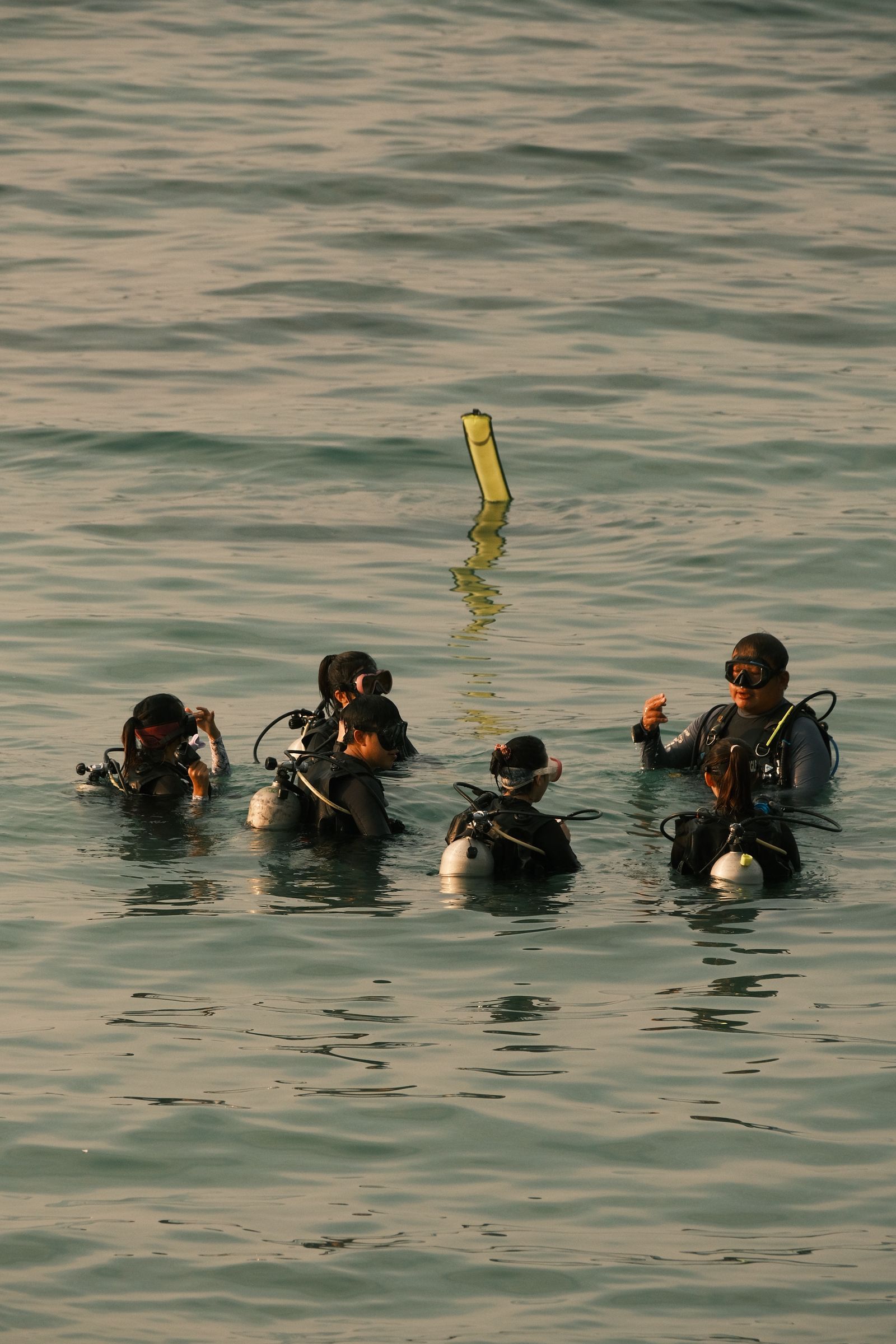
Direct answer: AI reception helps a dive center capture course inquiries outside office hours by answering common questions, collecting the right booking details, creating or updating the CRM record, and flagging the cases that need a trained instructor or manager. For a scuba school, this is not about replacing the instructor team. It is about making sure a high-intent guest who asks about Open Water Diver, try dives, refresher training, or group certification at 9:40 p.m. is not left waiting until the next morning.
Most dive centers do not lose course bookings because the course is bad. They lose them in the quiet space between first interest and first organized response. A travel diver sends a WhatsApp message after dinner. A parent asks whether two teenagers can start a certification course next week. A local diver fills out a form about Advanced Open Water and then compares three other operators. A guest calls while the team is loading tanks, checking rental equipment, or briefing a boat trip. By the time somebody has a calm admin window, the lead may already be booked elsewhere.
The operating reality is getting sharper. The World Travel & Tourism Council forecasts Travel & Tourism will contribute $12 trillion to the world economy in 2026, with Europe travel growth expected to outperform the wider regional economy. At the same time, PADI's 2026 digital ecosystem guidance notes that travelers increasingly discover and compare dive experiences through online channels, AI-assisted planning, maps, marketplaces, and mobile booking journeys. For dive centers, the lesson is clear: visibility creates opportunity, but responsiveness converts it.
Why After-Hours Course Leads Are Different
A course inquiry is usually more valuable and more complex than a single fun dive request. The guest may need prerequisites, age checks, medical screening guidance, schedule options, eLearning information, equipment sizing, deposit rules, language support, and reassurance about what the course feels like. If the inquiry is for a family, a school group, or a short holiday window, the conversation can involve several people and a hard deadline.
This is where an AI receptionist for dive centers becomes useful. It can respond immediately, but more importantly it can structure the conversation. Instead of a scattered message thread, the dive center receives a CRM-ready record: course interest, preferred dates, certification level, number of guests, language, accommodation or travel timing, previous diving experience, and the best channel for follow-up. That information gives the human team a cleaner start.
What AI Reception Should Do for a Course Inquiry
A strong AI reception workflow starts with the questions a good front desk person would ask, not with a generic chatbot script. For Discover Scuba Diving, the system should capture the date, number of participants, swimming comfort, age range, preferred language, hotel or transport constraints, and whether anyone has medical concerns that must be reviewed by qualified staff. For Open Water Diver, it should ask about course timing, eLearning preference, pool and open-water availability, prior experience, equipment needs, and whether the guest is local or traveling.
For Advanced Open Water, specialty courses, Rescue Diver, or refresher requests, the AI receptionist should avoid guessing eligibility. It should collect certification history and recency, then pass the record to an instructor. Safety-sensitive questions need a clear guardrail: the AI can explain that dive staff will review the case, collect context, and route the inquiry. It should not provide individualized medical, decompression, weather, or suitability decisions.
That balance matters because AI adoption is moving quickly, but business owners still need practical implementation. The Federal Reserve Bank of San Francisco reported in July 2026 that nearly 40% of small business survey respondents were using or planning to use AI, with use cases including customer service, written communications, analytics, and custom tools. The same research also noted barriers such as cost, training time, knowledge gaps, and concerns about accuracy. Dive centers should read that as a warning against loose automation and a reason to set up AI reception with clear boundaries.
The CRM Is Where the Booking Gets Protected
A fast answer is useful. A fast answer that disappears into a chat thread is not enough. The real operational value comes when the inquiry is saved into a dive center CRM with the right labels, pipeline stage, reminder, and next action. This is where MOLA for Dive Center fits the daily workflow: AI-assisted reception, lead capture, organized customer data, follow-up, booking support, and visibility across the guest journey.
For example, a late-night Open Water inquiry can enter the CRM as "Course inquiry - Open Water - July dates." The system can tag it as travel diver or local diver, record the source as WhatsApp or web form, note that equipment rental is needed, and set a follow-up task for the morning. If the guest asks a question the AI should not answer, such as a medical issue or whether a young diver is ready for a specific dive, the record can be escalated to the instructor team.
How This Helps the Instructor Team
Many instructors are already doing two jobs: teaching and front desk follow-up. During high season they may be guiding Discover Scuba Diving in the morning, running Open Water skills in the afternoon, and answering guest messages in between. That is fragile. It makes response quality depend on who has a free hand and a charged phone.
AI reception reduces that load by taking the first pass. It can explain course formats, share general preparation information, answer opening-hours questions, capture preferred dates, and send the right next step. It can also separate easy admin from expert judgment. A question about course start times can be answered. A question about medication, minimum age, weather suitability, or whether a diver should join a specific trip should be escalated.
Gartner's 2026 customer service research found that service leaders are under strong pressure to implement AI, but also emphasized that AI and human expertise need to work together. That is the correct model for a dive center. AI should make routine service faster while protecting the moments where experience, empathy, and professional judgment matter.
A Practical Setup for Dive Centers
A dive center does not need to automate everything on day one. A sensible first launch focuses on the highest-value inquiry types: Open Water Diver, Discover Scuba Diving, refresher dives, Advanced Open Water, private courses, group bookings, and course-plus-fun-dive packages. Each flow should have a clear purpose: collect the missing information, give safe general answers, create the CRM record, and hand off the next action.
The system should also understand channel behavior. WhatsApp inquiries are often conversational and urgent. Email inquiries are more detailed and may involve groups. Phone calls often need immediate reassurance. Website forms can carry the cleanest structured data, but only if the follow-up is quick. MOLA helps pull these inquiries into a more organized operating rhythm, so the owner can see what is waiting, what is qualified, and what needs a person.
What Owners Should Measure
After-hours course inquiry automation should be measured like a business system, not like a novelty. Useful metrics include first response time, qualified course inquiries per week, inquiry-to-consultation rate, consultation-to-booking rate, lost leads by channel, average follow-up delay, and how many safety-sensitive questions were escalated correctly. These numbers help the owner see whether the scuba school is growing or simply staying busy.
The most revealing number is often the morning backlog. Before AI reception, the team may arrive to a mixture of missed calls, WhatsApp messages, emails, and form submissions with no priority. After setup, they should see a ranked list: ready-to-book course leads, guests waiting for schedule confirmation, family or group inquiries, rental-dependent bookings, and cases needing instructor review. That is operational visibility.
Where MOLA Fits
MOLA for Dive Center is designed around the practical needs of dive shops, scuba schools, and dive centers: reduce admin work, respond faster, capture leads, keep CRM data organized, support booking workflows, and improve follow-up. AI reception is the front layer, but the value grows when the inquiry connects to the broader operating system. A lead becomes a contact. A contact becomes a pipeline opportunity. A course opportunity becomes a booking conversation. A completed course becomes a repeat-diver follow-up, review request, specialty offer, or local community invitation.
For owners, the goal is not to make the dive center feel automated. The goal is to make it feel responsive and well run. Guests should receive useful answers quickly. Staff should spend less time sorting scattered messages. Instructors should handle the questions that deserve their judgment. The CRM should show where revenue is coming from and which course leads need action now.
If your dive center is missing course inquiries after hours, start with one focused workflow: capture the guest, qualify the course request, protect safety handoffs, and follow up the next morning with context already in place. You can explore how MOLA supports this operating model here: see MOLA for Dive Center.
FAQ
Can AI reception answer every dive course question?
No. It should answer routine questions and collect context, but safety-sensitive, medical, eligibility, weather, and training judgment questions should be escalated to qualified dive staff.
Does AI reception replace the front desk or instructors?
No. It supports them by handling the first response, organizing the CRM record, and making follow-up easier. Humans still own training decisions, guest care, and final booking confirmation.
Which course inquiries are best for AI reception?
Open Water Diver, Discover Scuba Diving, refresher dives, Advanced Open Water, private courses, group certifications, and course-plus-trip packages are strong starting points because they require fast qualification and structured follow-up.
How does a dive center CRM improve course conversion?
A CRM keeps the inquiry, guest details, source, course interest, follow-up tasks, and booking stage in one place. That prevents valuable course leads from being buried in phone logs, WhatsApp, or email.
What should be measured after launch?
Measure response time, qualified inquiries, booking conversion, follow-up delay, channel source, escalations, and the number of leads that moved from inquiry to confirmed course booking.
