Direct answer: AI reception helps a dive center grow when it captures every phone, WhatsApp, email, form, and chat inquiry, organizes the contact inside a dive center CRM, flags the next action, and shows the owner where demand is building across courses, fun dives, boat trips, rental, repeat customers, and referrals. For a scuba school or dive shop, that turns scattered conversations into an operating pipeline the team can use.
Many dive centers do not have a demand problem first. They have a visibility problem. A travel diver asks about reef dives on WhatsApp. A local customer leaves a voicemail about an Advanced Open Water course. A hotel partner sends a family try-dive inquiry by email. The team replies when it can, but the owner still cannot see the whole picture: which inquiries are warm, which course dates are filling, which boat trips need follow-up, and which past customers should be invited back.
This is where MOLA for Dive Center is most useful. MOLA combines AI-assisted reception, missed-call recovery, CRM organization, booking support, automated follow-up, review generation, and guided setup for dive centers. The AI receptionist is the front door, the CRM is the memory, and follow-up keeps opportunities from disappearing during a busy day on the boat.
Why Dive Centers Need Pipeline Visibility in 2026
Travel demand remains strong, but the way customers discover and compare experiences is changing quickly. The World Travel & Tourism Council's 2026 forecast says travel and tourism is expected to grow faster than the wider economy and remain a major source of jobs and business activity. For dive centers, that growth is useful only if the shop can respond while the customer is still ready to book.
PADI's 2026 article on growing a dive business through its digital ecosystem makes the same operational point from a diving perspective. Travelers now discover activities through more digital touchpoints, including maps, online travel channels, marketplaces, mobile search, and AI-assisted trip planning. PADI also notes that experiences are becoming a bigger reason people choose destinations, while online bookings for travel experiences continue to grow.
That creates opportunity, but it also creates leakage. A guest who finds your dive shop through one channel may ask a question through another. AI reception for dive centers should help by turning the first contact into structured CRM data from the start.
The Growth Pipeline a Dive Shop Should Actually Track
A useful dive center CRM should show more than "new lead" and "won." Dive businesses sell different products with different decision paths. A Discover Scuba Diving inquiry is not the same as an Open Water course lead. A certified diver asking for a two-tank trip is not the same as a family asking about equipment rental, pickup, and beginner options. A local diver who completed a course last month is not the same as a tourist arriving tomorrow.
AI reception can help sort those inquiries into practical stages: new inquiry, qualified, staff review needed, quote sent, deposit pending, forms pending, confirmed, completed, review requested, and repeat offer ready. The words can be adjusted to the dive center, but the principle should stay the same. Every stage must tell the team what to do next.
The Federal Reserve Bank of San Francisco's 2026 research brief on AI adoption among small businesses found that nearly 40% of small business respondents were already using or planning to use AI. It also lists customer service, analytics, forecasting, marketing, and productivity among common uses. Those are exactly the areas where a dive center can benefit, as long as the system is set up around real work instead of generic automation.
AI Reception Should Support Staff, Not Replace Judgment
Customer service automation is moving fast. Gartner's 2026 customer service research reports heavy pressure on service leaders to implement AI, with organizations looking at first-contact resolution, reduced customer effort, and stronger service journeys. The same direction makes sense for dive centers, but with an important limit: diving has safety-sensitive decisions that must stay with trained staff.
An AI receptionist can answer routine questions about opening hours, course options, booking steps, rental information, what to bring, payment links, and available trip categories. It can collect useful context for medical questions, recent dive experience, weather concerns, certification level, equipment fit, language needs, and special requests. It should not decide whether a person is medically fit to dive, whether conditions are safe, or whether a diver belongs on a specific advanced site. Those questions need a clear handoff to the instructor team.
This balance keeps the professional diving relationship human where it matters most.
What This Looks Like in Daily Dive Center Operations
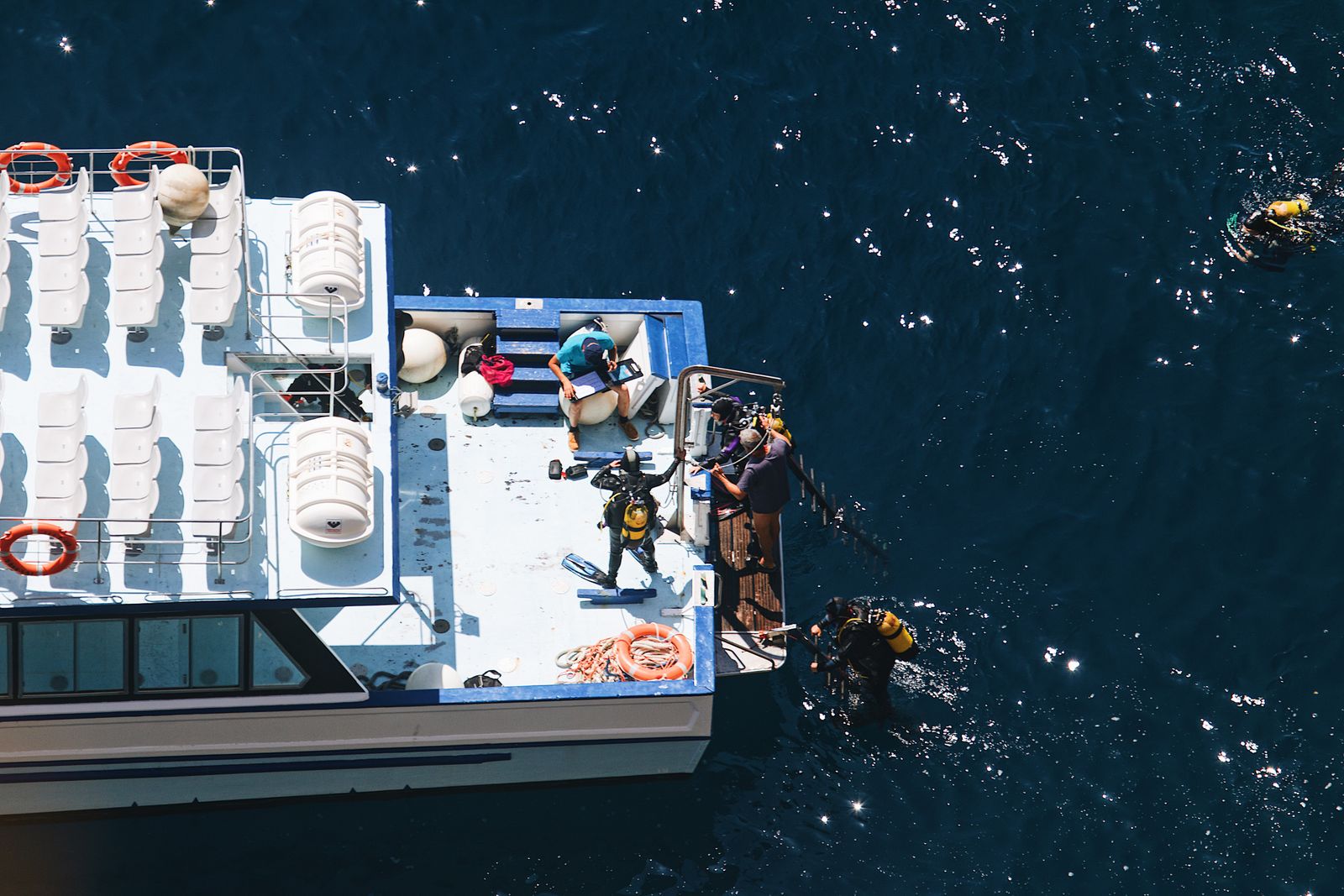
Imagine a busy morning at a resort dive center. The boat leaves at 8:30. The instructor team is checking tanks, helping guests with equipment, and confirming paperwork. While that is happening, three new inquiries arrive: a certified couple asks about tomorrow's wreck dive, a family asks whether beginners can join a try dive, and a local diver calls about the next Rescue Diver course.
Without AI reception, those messages wait or get handled in fragments. With MOLA, the AI receptionist can acknowledge each inquiry, collect the right details, create or update the CRM record, apply the correct tag, and trigger a follow-up task. The couple may go into the trip pipeline. The family may go into a Discover Scuba Diving lane with language and age details. The Rescue Diver inquiry may go into the course pipeline with prerequisites for staff review.
By lunch, the owner can see what happened while the team was serving guests. That visibility supports better business development: which courses are getting interest, which trip dates need promotion, which referral partners send strong leads, and which repeat-customer offers should go out before the low season.
Set Up the CRM Around Decisions, Not Software
The practical setup starts with a simple question: what decisions does the dive center need to make faster? Most centers need to know whether a person wants a course, a fun dive, a try dive, equipment rental, a private guide, a group booking, a referral arrangement, or a follow-up after a previous experience. They also need to know whether the question is routine or needs trained staff.
From there, the AI receptionist should use approved wording, clear qualification questions, channel-specific capture, and conservative escalation rules. The CRM should show pipeline stage, interest type, desired date, language, group size, certification level, rental needs, source, and next action. The automation should then follow up politely without pretending to be an instructor or making unsafe promises.
This is why guided onboarding matters. A generic AI chatbot may answer a few questions. A properly configured AI reception and CRM system reflects the way the dive center actually operates.
Ready to See Your Dive Center Pipeline Clearly?
If your dive center is receiving inquiries through phone, WhatsApp, email, website chat, forms, social messages, and referral partners, MOLA can help you capture them in one CRM pipeline and follow up faster. Book a MOLA for Dive Center demo to see how AI-assisted reception can reduce admin work, improve lead follow-up, and give your team a clearer view of course, trip, and repeat-customer demand.
FAQ: AI Reception and Dive Center CRM Pipelines
What is an AI reception dashboard for a dive center?
It is a CRM view that shows incoming inquiries, lead source, customer intent, pipeline stage, next action, and staff-review items created through AI-assisted reception.
How does AI reception help a scuba school grow?
It captures course inquiries faster, organizes prospects by course type, follows up on missing steps, and helps staff see which leads need a call, quote, schedule option, or prerequisite check.
Can AI reception help with dive trip bookings?
Yes. It can collect preferred dates, certification level, last dive date, rental needs, language, group size, and trip interest, then place the opportunity in the right CRM pipeline for staff follow-up.
Should an AI receptionist answer diving safety questions?
No. It should collect context and escalate medical, weather, suitability, standards, or site-specific safety questions to trained dive staff.
Why does CRM matter for repeat divers?
A CRM lets the dive center see past courses, completed trips, interests, reviews, referrals, and follow-up opportunities, which helps turn one-time guests into returning customers.
