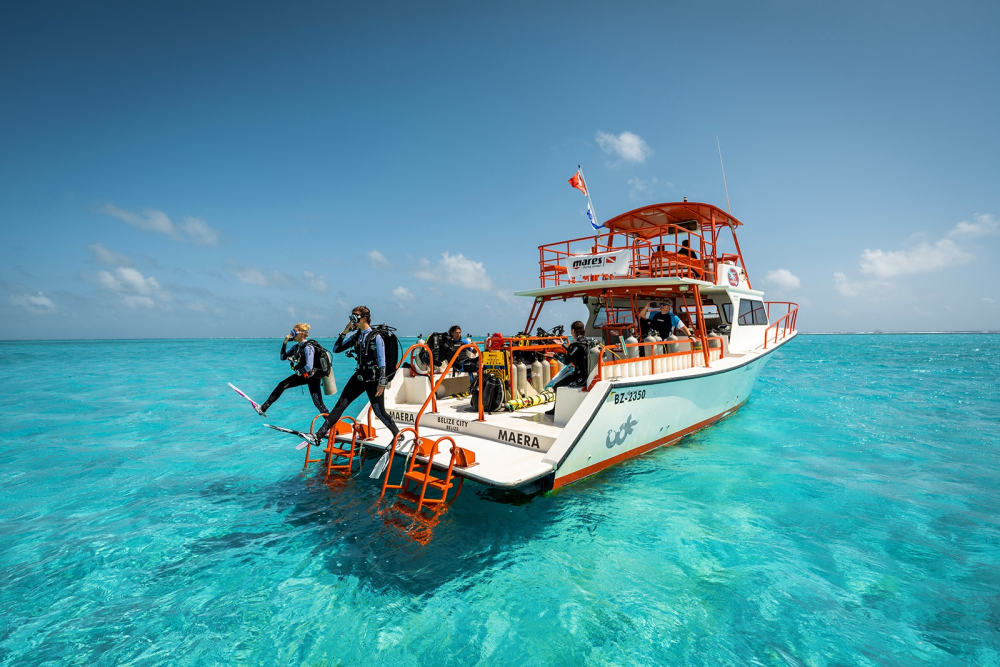
Direct answer: A dive center earns more reviews and referrals when the follow-up happens while a guest still remembers the crew, the boat, and the feeling of a good dive. AI reception can make that follow-up dependable across WhatsApp, email, and phone, record the result in the CRM, and route the conversations that require a real person. It should never decide a safety issue, settle a complaint, or turn a guest’s fitness, certification, weather, or suitability question into an automatic promise.
Consider the last twenty minutes of a busy boat day. A travel diver has just seen their first turtle. A local diver is already asking about next month’s night dive. A Discover Scuba guest’s family is waiting at the dock. The instructor is rinsing equipment, the skipper is checking fuel, and the office is answering a WhatsApp question about a rental. That is not the moment to ask staff to remember who had a great experience, who needs a receipt, who mentioned a friend, and who had an unresolved concern.
It is the moment for a small, disciplined reception system. It captures the trip or course context, sends an approved thank-you at the right time, gives a happy guest a simple route to leave a review or share the center with a friend, and sends anything uncertain to the right person. The outcome is not a louder marketing machine. It is a cleaner relationship record and fewer good experiences disappearing into silence.
Visual 1: From boat return to a usable relationship record
Caption: A good experience becomes operationally useful only when the response and next action are visible, not when staff hope to remember it later.
Why the follow-up window is so small
Guests do not think in CRM stages. They think about the dive they just completed, their photos, the next restaurant, or the flight home. The center should respect that. A prompt thank-you can be useful. A generic campaign fired for every contact in the database is not. The signal to act is a completed trip, course session, rental return, or a positively resolved conversation, paired with the guest’s stated channel and consent settings.
The practical message is short: thank the guest, name the experience in general terms, offer the appropriate review route, and give them an easy way to reply if they need help. A travel diver may prefer an email after arriving at their hotel. A local diver may answer WhatsApp. A family booking a beginner experience may need the message in another language. MOLA’s AI reception and CRM features give a center one place to retain that context instead of treating each channel as a separate memory test.
Digital discovery makes those guest signals more valuable. In its July 2026 guide, PADI explains that travelers discover, compare, and book diving through Google, maps, marketplaces, websites, and AI-assisted planning. A real recent review helps the next traveler understand what a center offers. It does not replace an honest description, clear requirements, or staff confirmation of availability.
Build a review and referral lane that staff can trust
A lightweight CRM setup is enough. Add the completion date, activity type, guest language, contact preference, and a follow-up status. Then make the statuses unambiguous:
- Ready for thank-you: the activity is complete and no unresolved issue is open.
- Review invitation sent: the approved message and link were delivered.
- Referral interest: a guest says a friend, partner, hotel, or group may enquire.
- Needs staff care: feedback contains a complaint, a refund request, a safety concern, or anything the system must not resolve.
- Closed with outcome: review received, referral converted, staff response complete, or no further contact requested.
The distinction between a review and a referral matters. A review is feedback for a public channel. A referral is a new conversation that needs permission, context, and an owner. Do not assume the referred person has agreed to contact. Invite the existing guest to share an approved link or ask the friend to contact the center directly. When the new person does enquire, capture where they heard about the center without making the original guest chase the booking.
Visual 2: The post-dive follow-up board
Caption: The board helps a small team see which happy experiences can be acknowledged and which conversations need human care before anything public is requested.
Let AI collect context. Let trained people make decisions.
There is a hard boundary around the follow-up. A guest who replies, “I felt unwell after the dive,” “The current was stronger than expected,” “Can my uncertified friend join tomorrow?” or “I want a refund” must reach trained staff. AI can acknowledge the message, preserve the original wording, record the trip context, and mark it urgent under the center’s policy. It must not offer medical advice, assess fitness to dive, determine certification eligibility, decide whether a dive site is suitable, explain changing weather as a promise, judge a complaint, or authorize an exception.
This is consistent with DAN’s dive-operator guidance, which identifies certification, last-dive date, language comprehension, age, experience, comfort in the water, medical fitness, and site conditions as safety-relevant factors. An AI receptionist can collect a clear record. Only trained staff should decide what that record means for a particular person and dive.
Visual 3: The safe response boundary
Caption: AI can acknowledge, capture, and route. Trained staff own medical, safety, weather, certification, suitability, complaint, and exception decisions.
Measure the workflow, not just the star rating
A manager does not need a complicated dashboard to learn whether the system helps. Review three operating questions each month: How many completed experiences received a timely thank-you? How many replies were routed to a named person? How many referral enquiries became an identifiable new conversation? Add one quality check: were complaints and safety-sensitive messages escalated without an automated promise?
Those measures expose bottlenecks without pretending that every review or referral can be automated. They also protect staff workload. If instructors see the same guest questions after every course, the center can improve its approved information. If a particular boat trip produces more referrals, the manager has a useful operational signal. If feedback identifies a recurring issue, the team can fix it before asking for more public proof.
FAQs about AI reception, reviews, and referrals
When should a dive center ask for a review?
After a completed trip, course session, or positively resolved interaction, using the guest’s preferred channel and the center’s consent rules. Do not ask while a complaint or safety concern is unresolved.
Can AI send a review link automatically?
Yes, when staff have approved the message, timing, channel, and trigger. The system should record that it was sent and give the guest a clear route to reply to a person.
Can AI handle a complaint in a post-dive message?
No. It can acknowledge receipt, preserve the message, and alert the appropriate team member. A trained person should assess the complaint and decide the response.
How should a center handle a referral?
Invite the existing guest to share an approved link or have the new person contact the center directly. Capture the referral source when the new enquiry arrives, then let staff own the booking conversation.
Does this work for both travel divers and local divers?
Yes. Travel divers may need post-trip email follow-up, while local divers may prefer WhatsApp or a future-course reminder. The CRM should retain the channel preference and the actual next step.
Keep the good experience connected to the next conversation
Reviews and referrals are not a replacement for a well-run dive center. They are the result of one. A practical AI reception layer makes the follow-up reliable, gives staff clean handoffs, and protects the moments that deserve human judgment. To see how MOLA connects reception, CRM visibility, missed-call recovery, and booking follow-up for dive operations, book a MOLA for Dive Center walkthrough.
